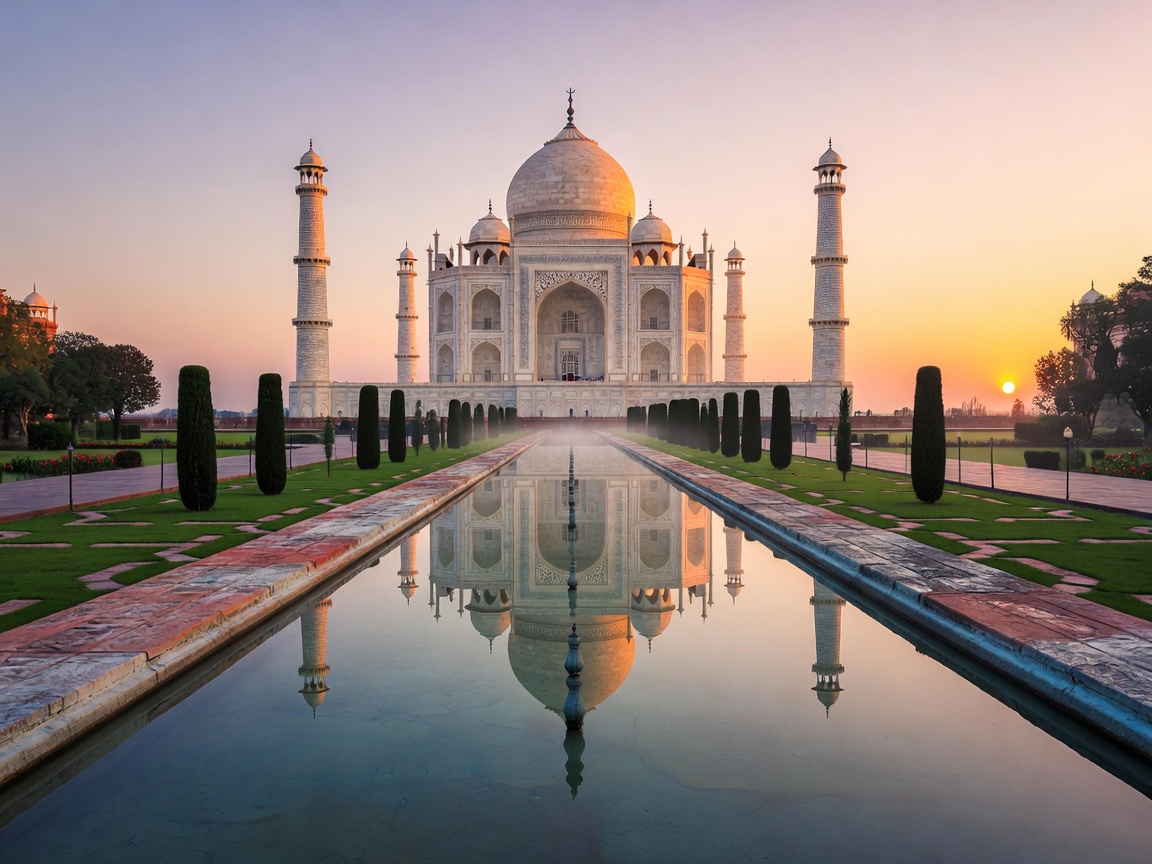
The Crown of Palaces
Standing on the southern bank of the Yamuna River, the Taj Mahal is widely considered the jewel of Islamic art in India. Commissioned by the fifth Mughal Emperor Shah Jahan to honor his beloved wife Mumtaz Mahal, this ivory-white marble mausoleum took over 20,000 master artisans more than two decades to complete.
Key Atlas Intelligence
- Architectural Style: Perfect bilateral symmetry combining Indo-Islamic, Persian, and Ottoman influences.
- Optical Illusions: Minarets lean slightly outward to prevent damage to the main dome during earthquakes and create proportion balance.
- Pietra Dura Inlays: Semi-precious stones including lapis lazuli, jade, crystal, and turquoise inlaid into translucent Makrana marble.
The Light Shift Experience
The translucent marble of the Taj Mahal changes color throughout the day. At dawn, it glows with a subtle pink and soft golden hue; at midday, it turns brilliant porcelain white; and under full moonlight, it assumes a shimmering bluish tint.
Key Highlights
- Unrivaled sunrise views from the Mehtab Bagh reflection gardens across the river.
- Breathtaking calligraphy carved from black marble outlining Quranic verses.
- Impeccably maintained Charbagh (four-fold Persian garden layout).
Travel Advisory
- Closed every Friday for religious prayers and maintenance.
- Strict security guidelines restrict tripod equipment and large baggage.
- Morning fog between December and January can obscure early dawn visibility.
Official Tourism & Ticket Portal
For verified entry ticket bookings and official archaeological monument regulations: